

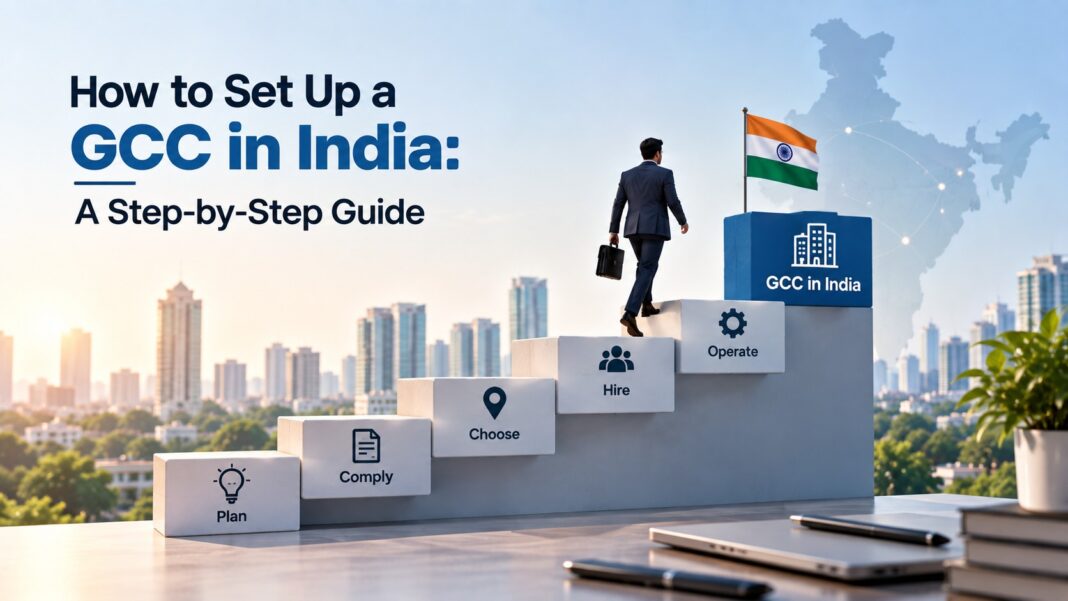
Over the past decade, the narrative surrounding global business operations has fundamentally shifted. Multinational corporations are no longer viewing offshore locations merely as cost-saving back offices. Instead, they are building strategic innovation hubs that drive global value, advanced product development, and digital transformation. At the forefront of this evolution is the decision to pursue a GCC setup in India, a move that offers access to a vast, highly skilled talent pool, robust digital infrastructure, and a mature, diversified corporate ecosystem.
However, capitalizing on these advantages requires more than just capital and ambition. Executing a successful GCC setup in India demands a structured, phased approach that carefully aligns global corporate standards with local market realities. From navigating complex regulatory frameworks to selecting the right micro-market for talent acquisition, organizations must move beyond surface-level assumptions. This guide outlines the critical phases of building a capability center, ensuring a seamless transition from conceptualization to full-scale, sustainable operations.
Phase 1: Strategic Alignment and Feasibility Mapping
Before signing any leases or drafting job descriptions, leadership must clearly define the center’s core mandate. Is the primary focus on IT support, advanced R&D, financial shared services, or customer experience? Answering this dictates every subsequent decision. During this phase, companies should conduct a thorough Total Cost of Ownership (TCO) analysis and comprehensive talent mapping across different Indian cities. This rigorous evaluation ensures that the vision for a Global Capability Center in India transforms from a broad strategic idea into a data-backed, financially viable business case.
Phase 2: Entity Structuring and Regulatory Compliance
The legal foundation of the operation dictates its long-term agility and tax efficiency. Companies typically choose between establishing a wholly-owned subsidiary (WOS), a branch office, or a joint venture, each carrying distinct implications for capital repatriation and liability. Navigating the Reserve Bank of India (RBI) guidelines, Goods and Services Tax (GST) registrations, and state-specific labor laws requires meticulous attention to detail. Partnering with experienced local legal and tax advisors early in the GCC establishment in India process is critical. This proactive approach mitigates compliance risks and prevents costly administrative delays during the crucial launch window.
Phase 3: Location Strategy and Real Estate Acquisition
India’s corporate landscape is highly regionalized, and a one-size-fits-all approach to real estate rarely works. While traditional hubs like Bengaluru and Gurugram offer deep, established talent pools, emerging corridors in cities like Hyderabad, Pune, and Chennai present compelling alternatives with lower attrition rates and better cost arbitrage. The real estate strategy should prioritize scalable, Grade-A infrastructure. Key considerations include reliable power redundancy, seamless internet connectivity, proximity to public transit, and amenities that support modern hybrid work models and employee well-being.
Phase 4: Leadership Hiring and Talent Acquisition
The ultimate success of any capability center hinges on its people, and the most critical first hire is often the site leader or head of the GCC. This individual must possess a rare dual competency: a deep understanding of the parent company’s global culture and strategic goals, coupled with extensive knowledge of local market dynamics and talent networks. Once leadership is in place, building a localized recruitment strategy is essential. This involves leveraging regional universities, engaging specialized hiring partners, and developing a strong employer brand to attract and retain top-tier professionals in a highly competitive landscape.
Phase 5: Operational Launch and Cultural Integration
The final phase transitions the center from a legal entity on paper to a fully functioning, high-performing business unit. This involves deploying secure, enterprise-grade IT infrastructure, establishing strict data governance and cybersecurity protocols, and rolling out comprehensive onboarding programs. Crucially, global leadership must actively foster a culture of integration from day one. The new center should not be treated as a siloed, distant vendor, but rather as an indispensable, collaborative extension of the global headquarters, with clear communication channels and shared performance metrics.
Conclusion
Building a global capability center is a significant, long-term investment that reshapes how a multinational corporation operates. By approaching the process methodically grounded in thorough feasibility studies, precise legal structuring, strategic location planning, and a relentless focus on talent and culture organizations can navigate the complexities of the Indian market. When executed with care, this step-by-step framework lays the foundation for a resilient, innovative hub that drives measurable value for years to come.

