

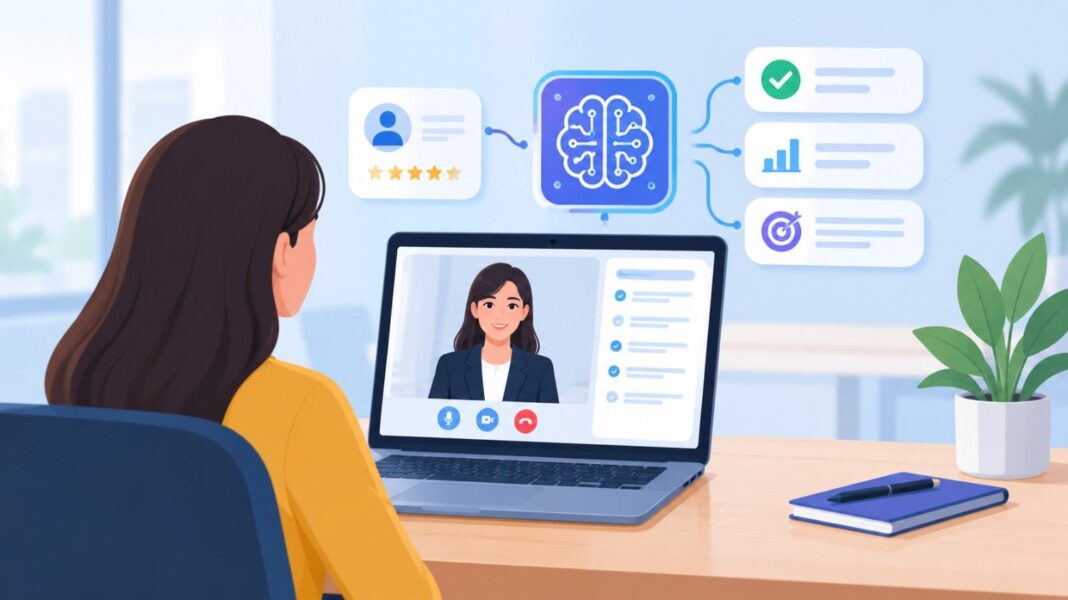
Recruitment teams are increasingly looking for ways to manage candidate volume without creating additional administrative work. Interviews are one of the most important parts of the hiring process, but they can also be one of the hardest stages to scale.
AI-based interview software can support recruiters by automating selected interview activities, creating structured evaluations, and organizing candidate information.
The technology can be used in several recruitment scenarios, from high-volume hiring to technical assessment and standardized first-round interviews.
High-Volume Recruitment
Large recruitment campaigns can generate more applicants than human interview teams can efficiently handle.
An AI-supported interview process can allow more candidates to complete structured first-stage evaluations without requiring every candidate to be scheduled with a recruiter or hiring manager.
This can be useful for campus recruitment, customer operations, technology hiring, and other high-volume roles.
Technical Candidate Assessment
Technical hiring often requires specialized interviewers.
AI-supported technical interviews can help organizations assess selected competencies before involving senior engineering staff.
This can reduce repetitive panel work while maintaining a structured evaluation process.
Standardized Behavioral Interviews
Behavioral interviews can also benefit from consistent frameworks.
Organizations can define competencies such as collaboration, ownership, communication, problem-solving, and leadership.
Candidates can then be evaluated against a common structure.
This can make results easier to compare across large candidate groups.
Flexible Candidate Scheduling
Interview scheduling can become a major source of delay.
When candidates can complete selected interview stages within an available window, recruiters may have fewer scheduling dependencies.
However, organizations should ensure that candidates receive clear instructions and understand how the process works.
Structured Evaluation
One of the central benefits of automation is standardization.
A structured interview framework can define:
- Competencies
- Questions
- Follow-up areas
- Evaluation criteria
- Scoring dimensions
- Reporting format
This can reduce variation in the interview process.
Candidate Reports
Recruiters and hiring managers need useful information rather than raw interview transcripts.
Structured candidate reports can summarize relevant competencies and provide a consistent format for review.
This can help hiring teams focus their discussions on evidence rather than scattered notes.
Reducing Recruiter Workload
Recruiters spend significant time coordinating interviews, collecting feedback, and following up with stakeholders.
Automating selected activities can reduce administrative effort.
The time saved can then be redirected toward candidate engagement, stakeholder communication, and strategic recruitment work.
Supporting Better Hiring Decisions
Automation does not guarantee better hiring decisions.
Its value depends on the quality of the evaluation framework.
If the organization defines the right competencies and collects useful evidence, structured technology can help decision-makers compare candidates more effectively.
Governance and Fairness
Recruitment teams should also consider fairness and responsible AI practices.
Automated interview systems should be monitored to understand whether candidate evaluations are consistent and whether unexpected differences occur.
Human oversight remains important for consequential decisions.
Choosing the Right Features
Recruiters evaluating platforms should consider:
- Adaptive interviewing
- Role customization
- Technical evaluation
- Competency-based scoring
- Candidate reporting
- Assessment integrity
- Workflow integration
- Security
- Privacy
- Analytics
The right feature set depends on the organization’s recruitment model.
AI-based interview software can support modern recruiters across high-volume hiring, technical recruitment, behavioral evaluation, scheduling, and structured reporting.
The technology works best when it complements a clearly designed recruitment process. Organizations should define job requirements, establish evaluation criteria, maintain human oversight, and measure outcomes.
Used in this way, AI-supported interviewing can help recruitment teams spend less time on repetitive coordination and more time on the conversations and decisions that require human expertise.

