

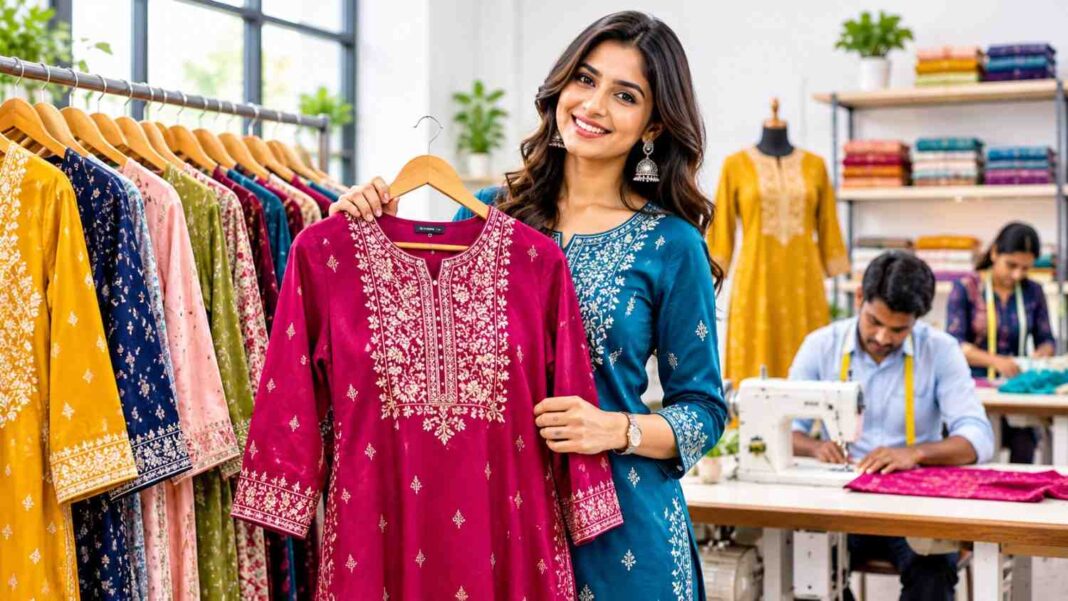
A successful ethnic-wear business needs more than attractive designs. Boutique owners and fashion retailers must find products that suit their customers, maintain a consistent collection and come from a manufacturing partner who understands bulk requirements. Choosing the right supplier can influence everything from product selection and stock planning to customer satisfaction. For retailers exploring new sourcing options, DREVA’s wholesale kurti collection offers a starting point for discovering women’s ethnic wear manufactured by DREVA, a brand of FabStitch Enterprise based in Ahmedabad.
The Indian ethnic-wear market includes a wide range of customer preferences. Some shoppers look for everyday cotton kurtis, while others prefer embroidered styles, coordinated kurta sets or contemporary fusion outfits. Retailers need collections that reflect their audience, season and price positioning. Understanding how garment manufacturing and wholesale sourcing work can help businesses make more informed purchasing decisions.
Why Kurtis Remain an Important Category for Fashion Retailers
Kurtis are versatile garments that can be styled for daily wear, office use, family gatherings and festive occasions. Their appeal comes from the variety of silhouettes, fabrics, prints, sleeve designs and embellishments available.
For boutiques, kurtis can also support different merchandise strategies. A retailer may stock simple styles for regular customers, embroidered designs for special occasions and coordinated sets for shoppers who prefer complete outfits.
Popular product categories include:
- Everyday kurtis: Practical styles for regular use, with a focus on comfort and easy styling.
- Embroidered kurtis: Designs featuring decorative threadwork or other embellishments for a more detailed appearance.
- Kurta sets: Coordinated garments that offer customers a ready-to-style outfit.
- Co-ord sets: Matching top-and-bottom combinations suited to contemporary ethnic and fusion fashion.
- Ethnic dresses: One-piece options for customers seeking a different silhouette.
A balanced product range can help boutiques serve customers with different tastes rather than depending on one design category.
What to Look for in a Kurti Manufacturer in Ahmedabad
Ahmedabad is an established textile and garment business centre. Retailers searching for a kurti manufacturer in Ahmedabad should evaluate more than the appearance of a sample garment. A reliable sourcing decision involves understanding product details, communication, order terms and quality expectations.
1. Product Range and Design Relevance
A manufacturer should be able to explain the types of garments it produces. Retailers may want to compare everyday kurtis, embroidered options, kurta sets, co-ord sets and dresses.
Before placing a bulk order, consider whether the designs suit your customer profile. A boutique serving working professionals may need different styles from a store focused on festive and occasion wear.
2. Fabric and Construction Details
Fabric affects the feel, appearance, drape and care requirements of a garment. Stitching quality, seam finishing, neckline construction, button placement and size consistency also matter.
Ask for clear product information and inspect samples where available. Check whether the fabric composition, size chart and care instructions are communicated accurately. These details can reduce confusion when products reach the retail floor.
3. Bulk Order Communication
Wholesale buying involves practical questions that should be settled before production or dispatch. Retailers should confirm the available sizes, colour options, order quantities, delivery expectations, payment terms and process for handling defects or discrepancies.
Written confirmation is useful because it gives both the buyer and supplier a shared understanding of the order.
DREVA’s Wholesale Kurti Collection for Boutiques and Brands
Boutiques and wholesalers often need more than ready-made garments. Some businesses want to source finished ethnic wear, while others want manufacturing support for their own clothing labels.
DREVA by FabStitch Enterprise manufactures women’s ethnic wear in Ahmedabad. Its stated product categories include kurtis, kurta sets, co-ord sets and dresses. The business also works with boutiques and wholesalers across India, handles export enquiries and offers OEM manufacturing, white-label clothing and bulk stitching job work for brands.
Retailers exploring DREVA’s wholesale kurti collection can use the website to learn more about the business and make an enquiry about suitable sourcing requirements.
Wholesale Kurtis for Boutiques
Wholesale sourcing allows boutique owners to build a product range without developing every garment independently. The important step is choosing styles that fit the store’s customer base and checking the product specifications before confirming an order.
When evaluating wholesale kurtis for boutiques, consider:
- Whether the designs match your store’s positioning.
- Whether the required sizes and colours are available.
- Whether product details are clear and consistent.
- Whether the supplier explains order quantities and delivery timelines.
- Whether the buying terms suit your inventory plan.
Embroidered Kurtis Wholesale
Embroidered garments can add visual variety to a collection. However, buyers should examine the placement, finish and consistency of embroidery. Ask whether embellishments are suitable for the intended use and whether the care instructions are clearly stated.
A retailer should also compare the garment’s overall construction rather than judging it only by decorative work.
OEM, White-Label and Kurti Stitching Job Work
Fashion businesses may have different manufacturing needs depending on their stage of growth.
OEM manufacturing generally refers to producing garments according to a buyer’s specifications or product requirements. This can be useful for brands that have their own design direction but need a manufacturing partner.
White-label clothing allows a business to sell products under its own brand identity, subject to the supplier’s product and labelling arrangements. Before proceeding, both parties should clarify branding permissions, labels, packaging and product specifications.
Kurti stitching job work in Ahmedabad may suit businesses that already have fabric, patterns or design instructions and require stitching support. The exact scope should be discussed in advance, including who supplies materials, who is responsible for trims and finishing, and how completed garments will be checked.
Questions to Ask Before Starting Production
A clear discussion can prevent avoidable misunderstandings. Ask the manufacturer:
- What product specifications and samples are required?
- What are the minimum order quantities, if applicable?
- Who will arrange fabric, lining, buttons and other materials?
- How will measurements and size grading be confirmed?
- What quality checks take place before dispatch?
- How are changes, delays or rejected pieces handled?
The answers should be documented before production begins.
Responsible Sourcing and Garment Information
Retailers should give customers accurate information about the clothing they sell. Fabric composition, washing instructions, colour-care guidance and sizing details help shoppers understand how to use and maintain a garment.
Businesses interested in responsible textile practices can also explore resources from the Textile Exchange, an organisation that publishes information and standards related to preferred materials and textile supply chains. Such resources can help brands understand broader sourcing considerations, although buyers should verify any specific material or certification claims made by a supplier.
Conclusion: Build Your Ethnic-Wear Range with DREVA
Choosing a garment manufacturer is an important decision for boutiques, wholesalers and growing fashion labels. Product variety, construction quality, clear order terms and dependable communication all contribute to a better sourcing process.
DREVA by FabStitch Enterprise brings together women’s ethnic-wear manufacturing, wholesale supply, OEM production, white-label clothing and bulk stitching job work from Ahmedabad. If you are exploring DREVA’s wholesale kurti collection, visit the website to review the available information and discuss your requirements directly. A clear conversation about designs, samples, specifications and order terms is a practical first step towards building a well-planned ethnic-wear collection.

