

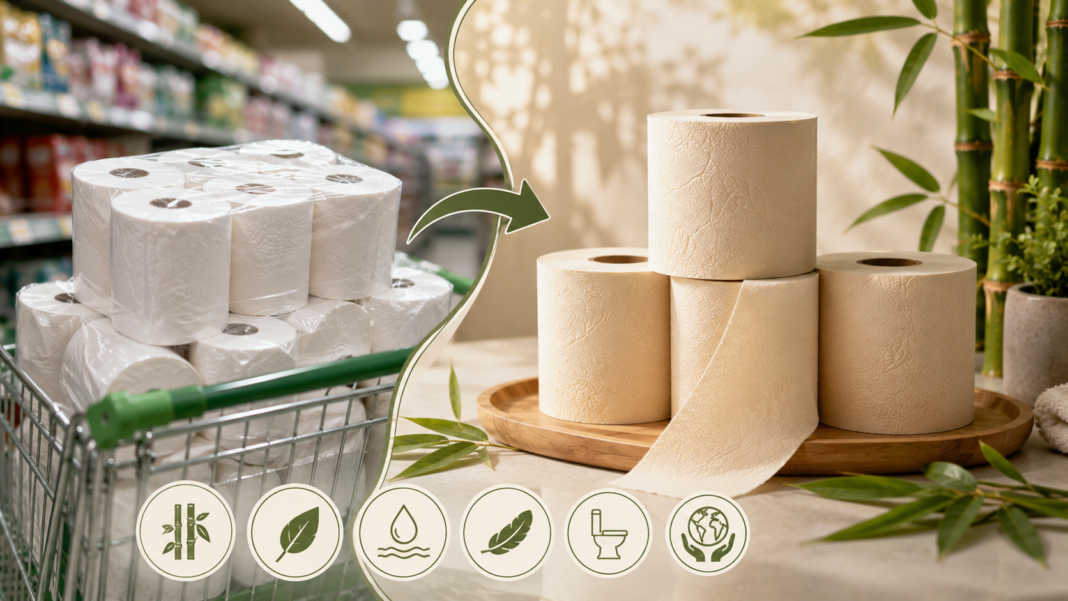
For decades, the toilet paper aisle looked the same in almost every grocery store: a wall of plastic-wrapped multipacks, differentiated mostly by brand name and price per roll. That aisle is changing, not through a dramatic overhaul, but through a slow substitution happening one household at a time as bamboo bathroom paper edges into carts that once defaulted to the same familiar packs.
A Shift That Started Online
The transition has not been led by big-box retailers. It began with smaller, direct-to-consumer brands selling bamboo toilet paper online, often through subscription models, before slowly working their way onto physical shelves as demand proved durable rather than a passing trend. That pattern mirrors how razors, mattresses, and skincare all moved from in-store staples to online-first categories before eventually earning shelf space back in traditional retail.
What’s Actually Driving the Switch
A few factors explain why bamboo has gained ground against the traditional multipack:
- Faster growth cycles mean bamboo can be harvested every few years rather than the decades required for hardwood trees, easing supply pressure as demand grows.
- Softness and strength are comparable to, and in some cases better than, traditional paper, removing the old assumption that eco-friendly meant a worse product.
- Organic Bamboo Toilet Paper options have given shoppers a reason to switch beyond price, appealing to buyers already avoiding chlorine bleach and added fragrance elsewhere in the house.
- Packaging has improved, with many brands now shipping in paper wrap instead of plastic film, addressing a long-standing complaint about “green” products arriving in decidedly ungreen packaging.
The Multipack’s Remaining Advantage
To be fair to the grocery-store multipack, it still wins on a few fronts. It’s available immediately, it’s often cheaper up front, and it doesn’t require planning ahead the way a subscription does. Bamboo alternatives have had to compete on more than sustainability alone to make real headway, which is part of why price and delivery convenience have become such a focus for newer brands rather than environmental messaging alone.
Subscriptions Are Filling the Gap
That focus on convenience has led to one of the more effective moves in the category: turning toilet paper into a recurring, automated purchase. Instead of remembering to buy it during a grocery run, households increasingly rely on a bamboo toilet paper subscription that ships on a set schedule, sized to actual usage. It removes the two biggest frictions with switching away from the multipack: remembering to buy it, and second-guessing whether the eco-friendly option is worth seeking out every single trip.
Some brands have paired that subscription model directly with the product itself. Wholeroll, for example, offers an organic bathroom tissue through a recurring bamboo bathroom paper subscription, effectively replicating the “grab it off the shelf” habit without requiring an actual shelf.
How Retailers Are Reacting
Grocery chains have historically been slow to disrupt their own best-selling categories, and toilet paper multipacks are reliable, high-volume sellers that don’t need much marketing effort to move. But as more shoppers arrive already loyal to a specific direct-to-consumer bamboo brand, retailers have had to respond in a few ways:
- Expanding shelf space dedicated to bamboo and other alternative-fiber paper, rather than treating it as a single token option.
- Partnering with or acquiring smaller sustainable brands to bring an established customer base in-house.
- Launching private-label bamboo lines aimed at capturing price-sensitive shoppers who want the sustainability angle without the subscription commitment.
None of this has displaced the multipack outright, but it reflects a retail category that no longer assumes shoppers will default to whatever’s cheapest without checking the fiber first.
What This Means for Retail Going Forward
As more households build a habit around delivery rather than in-store restocking, traditional retailers have started responding by expanding their own bamboo bathroom paper offerings and, in some cases, launching subscription programs of their own. The multipack is not disappearing, but it is no longer the only default option, and for a growing segment of buyers, it’s not even the first one they consider.
Worth Checking Before You Switch
Not every product marketed as bamboo delivers the same value, and shoppers weighing a permanent switch away from familiar multipacks are increasingly advised to:
- Confirm the fiber source and processing method rather than relying on the word “bamboo” alone.
- Compare cost per sheet, not just cost per roll, since roll sizes vary more in this category than in traditional paper.
- Check whether a subscription can be paused or adjusted, since usage needs change household to household.
The Bottom Line
The grocery-store multipack built its dominance on habit as much as quality. Bamboo bathroom paper is chipping away at that habit not by winning on price alone, but by making the switch as effortless as the thing it’s replacing. As subscriptions handle the logistics that used to keep buyers loyal to whatever was closest on the shelf, the multipack’s biggest advantage is quietly disappearing.

