

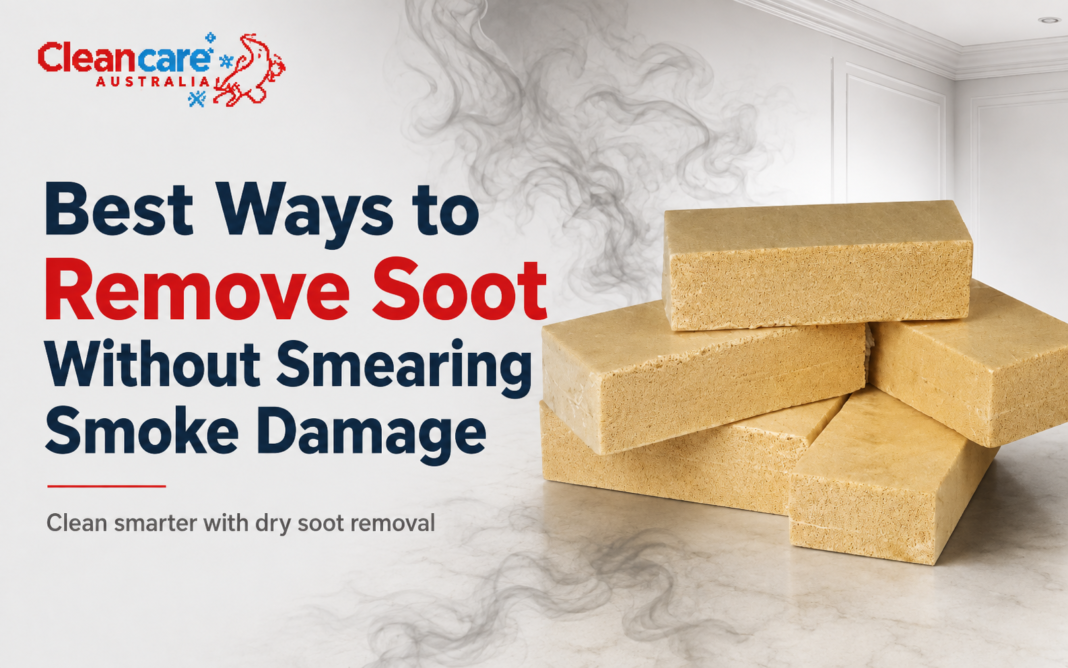
Soot can be frustrating to clean because it behaves differently from ordinary dust. Fine smoke particles may spread across a surface when they are wiped incorrectly, producing grey streaks or larger contaminated areas. One practical starting point is a soot sponge, which is designed to collect dry smoke and soot residue without requiring water during the initial cleaning stage.
Preventing smearing depends on more than the cleaning product itself. Surface assessment, preparation, pressure, direction of cleaning and work sequencing all affect the final result.
Why Does Soot Smear?
Soot contains extremely fine particles.
When these particles settle on walls, ceilings or decorative materials, they can loosely cling to the surface.
Adding liquid before removing loose particulate contamination may cause the residue to combine with moisture and spread.
Aggressive rubbing can have a similar effect.
Factors That Can Increase Smearing
- Excessive pressure
- Damp wiping too early
- Dirty cleaning tools
- Working randomly across the surface
- Failure to remove loose contamination first
- Using unsuitable household cleaners
- Repeatedly wiping with a contaminated cloth
A controlled process reduces these risks.
Step 1: Identify the Type of Damage
Not all dark marks are the same.
Before cleaning, consider whether you are dealing with:
- Loose fireplace soot
- Candle smoke
- Cooking smoke
- Fire damage
- Oily combustion residue
- Ordinary dirt mixed with smoke
Heavily burned or structurally damaged materials should not be approached as a routine cleaning job.
Step 2: Protect Nearby Surfaces
Contamination removed from a wall may fall onto the floor.
Cover furniture and flooring as necessary.
Remove items that do not need to remain in the room and create a clear work area.
This is particularly important when cleaning ceilings.
Step 3: Begin With Dry Removal
Dry cleaning is often a useful first stage for loose soot.
Use light pressure and allow the specialised cleaning material to collect contamination.
Do not immediately scrub stubborn sections.
A Controlled Technique
- Start with a test patch.
- Work in small sections.
- Use smooth strokes.
- Inspect the cleaning face frequently.
- Avoid circular aggressive scrubbing.
- Move systematically through the room.
- Stop if the surface begins to react poorly.
Good technique is often more important than speed.
Step 4: Keep Dirty and Clean Areas Separate
One reason soot spreads during cleaning is poor tool management.
A heavily contaminated cleaning face should not be dragged over a cleaner section.
The same principle applies to protective sheets, gloves and other tools.
Cross-contamination control becomes particularly important during commercial restoration projects.
Chemical Sponges for Controlled Dry Cleaning
Chemical Sponges are useful because they allow cleaners to work without continuously adding cleaning liquid to the surface.

They are particularly relevant for walls and ceilings, where liquid runoff can create additional mess.
Dry cleaning may also provide a clearer view of how much staining remains after loose soot has been removed.
Step 5: Reassess Before Wet Cleaning
Do not assume the entire job must be completed with one technique.
After reducing loose soot, inspect the surface again.
Ask:
- Is visible contamination still present?
- Is the remaining mark a stain rather than loose residue?
- Has the paint finish changed?
- Is an odour treatment required?
- Will the surface need repainting?
- Is specialist restoration necessary?
Only then should additional cleaning stages be planned.
Protect Delicate Finishes
Wallpaper, matte paint and older decorative coatings may respond differently from modern washable surfaces.
Always test.
If the coating begins to lift, polish, fade or transfer, discontinue cleaning and seek an alternative method.
Common Soot Cleaning Errors
Avoiding mistakes can save considerable time.
Using Too Much Water
Moisture can spread loose particles before they have been removed.
Scrubbing Harder When Progress Slows
More pressure is not automatically more effective.
Ignoring Corners
Smoke frequently accumulates at ceiling edges, cornices and around vents.
Using One Tool for the Entire Room
Contaminated tools can redistribute dirt.
Repainting Without Proper Preparation
Visible soot or residual contamination may affect the appearance of the finished coating.
When a Professional Is Needed
Professional restoration is appropriate when smoke damage is extensive or connected to a serious fire event.
Consider specialist assistance for:
- Multiple affected rooms
- Strong persistent odour
- Heavy ceiling contamination
- HVAC contamination
- Structural damage
- Burnt building materials
- Commercial premises
- Insurance restoration projects
These situations often require more than surface cleaning.
Why Choose CleanCare Australia?
CleanCare Australia supplies cleaning equipment, chemicals, accessories and specialist cleaning products to domestic and commercial customers. Its range supports professional cleaners, facilities teams and people carrying out maintenance or restoration projects. When a dry smoke sponge is required for controlled smoke and soot cleanup, CleanCare offers a purpose-made option designed for use on smoke-affected surfaces.
Final Thoughts
The best way to avoid smearing soot is to treat it as fine particulate contamination rather than ordinary dirt. Begin with assessment, protect the work area, remove loose residue using an appropriate dry method and introduce additional cleaning stages only when necessary. A methodical approach can make smoke cleanup cleaner, more predictable and easier to manage.

